Edith/Maddie writing from north of Boston where fall is looming, the school year has begun, and, sigh, the end of summer produce season is in my distant sights.
That said, nothing cheers me more than welcoming one of the best and most cheering authors around, my friend Catriona McPherson! She has a new installment out in her long-running historical Dandy Gilver series, a favorite. (Well, it’s been out in the UK and released today in the US!)
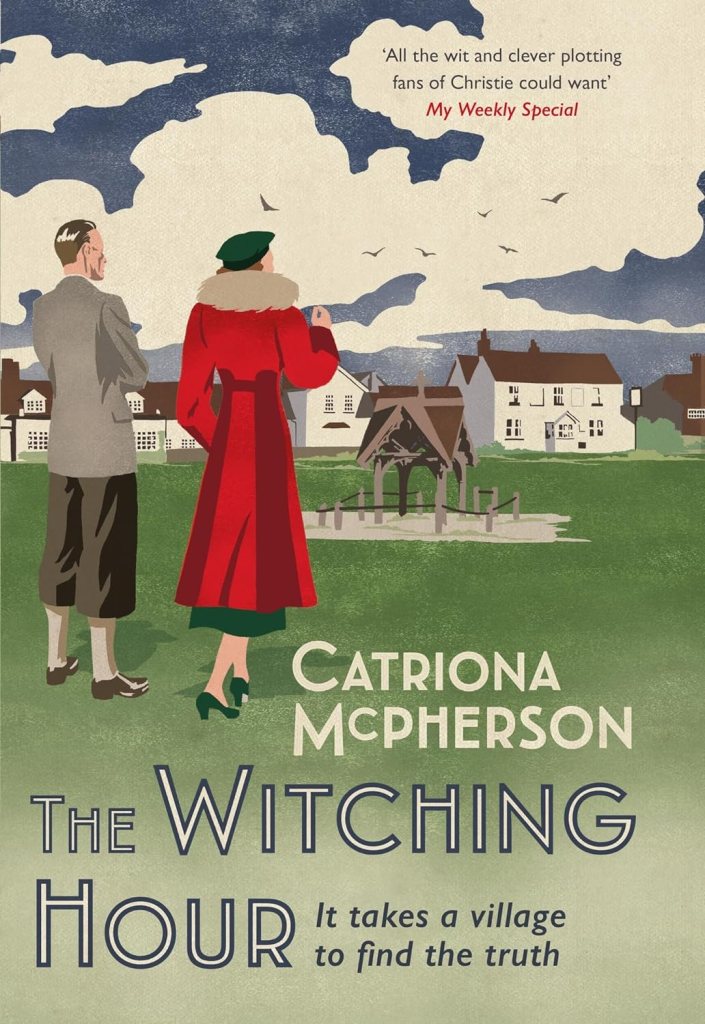
Here’s the blurb: In spring of 1939, Dandy Gilver, the mother of two grown sons, can’t think of anything except the deteriorating state of Europe and the threat of war. It takes a desperate cri de coeur from an old friend to persuade her to take on a case. Daisy Esslemont’s husband Silas has vanished. When Dandy and her side-kick, Alec Osborne, track the wandering Silas down to the quaint East Lothian village of Dirleton, he is dead, lying on the village green with his head bashed in, in full view of a row of alms houses, two pubs, a manse, a school and even the watchtowers of Dirleton Castle. And yet not a single one of the villagers admits to seeing a thing.
As Dandy and Alec begin to chip away at the determined silence of the Dirletonites, only one person – Mither Golane, the oldest resident of the village – is loose-lipped enough to let something slip, but her quiet aside must surely be the rambling of a woman in her second childhood. Dandy and Alec know that Silas was no angel but “He’s the devil” is too outlandish a claim to help them find his killer. The detecting pair despair of ever finding answers, but are they asking the right questions?
Stones and Burrs and Fairyfolk
Hey! It’s lovely to be back with the Wickeds. And, given the clue in your name, your location in the land of Salem and the fact that the new Dandy Gilver mystery is called The Witching Hour, no one is going to faint from shock that I’m writing about folklore today.
I’m from a folklore-saturated part of the world – Scotland – where, just for example, children brought up with both the old Celtic stories and the newer Christianity might, like me, have no clear sense of the difference between a fairy and an angel. I remember learning: angels have halos and fairies have feelers. Otherwise . . . pretty much the same thing, right?
All over Scotland, bits of folklore survive not only alongside organised religion but helped out by it. (Naughty sprites and mischievous pixies haven’t had nearly the work they used to get since the devil came along and stole their thunder.)
In my home burgh of South Queensferry it has just been Burry Man’s Day on the second Friday in August, when a local lad, covered from head to toe in the prickly seeds of the burdock plant, walks the town boundaries all day being given nips of whisky or money (for charity, these days), having his burrs plucked off his linen undergarments and replaced with flowers.
Why?
Fertility, good harvest, fending off evil . . . the usual reasons. (The church decided a while back, however, to start saying the origins of the practice were “lost in the mists of time”, which keeps everyone happy.) When I was a beginning writer, the Burry Man was impossible to resist and he’s got a starring role in Dandy Gilver No.2.

The bit of folklore that offered itself up for The Witching Hour was the lowping stane (leaping stone) set into the ground in the village of Dirleton in East Lothian. It’s by no means a henge but it had an important place in village life during earlier times. Still, on the last day of school, it’s draped with stinging nettles and all the schoolchildren jump over it before they go home.
Why?
I’m guessing fertility, good harvest, warding off evil . . . Specifically, this time it would make folkloric sense to test the local people for devilry before they went out into the fields to blight the crops they were supposed to be bringing in. It’s no surprise that, these days, only children do the leap – most practices are recast as childhood games when modern education replaces the old beliefs. It’s no more of a surprise to read that the origins are “lost in the mists of time”.
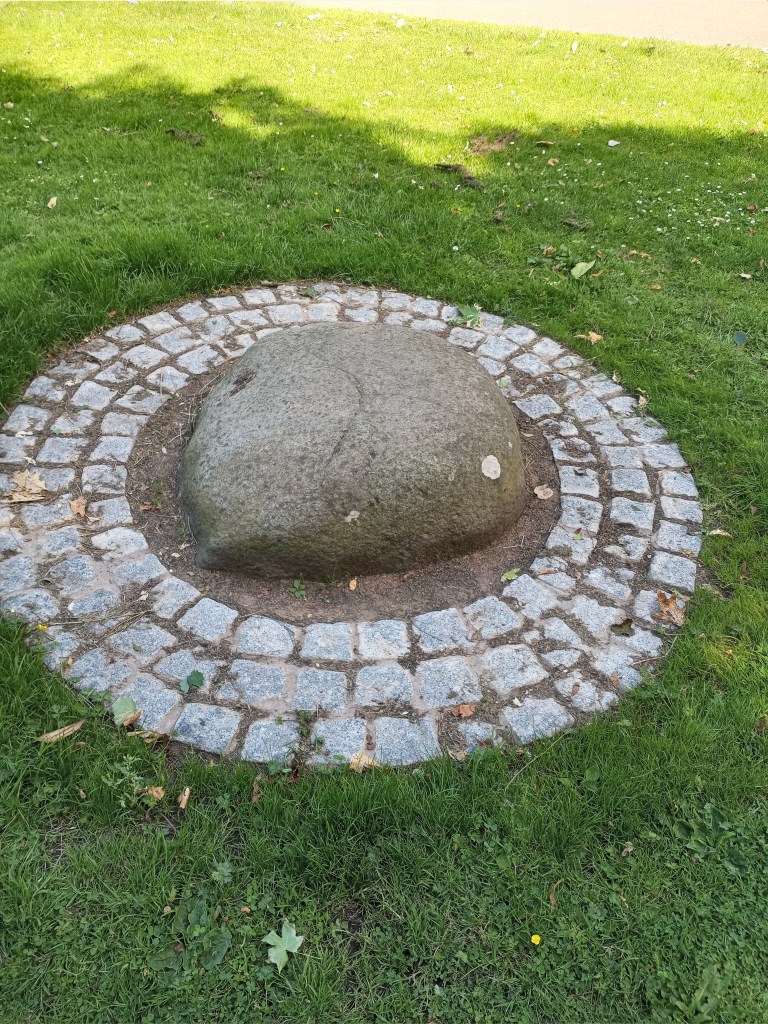
I’ve given the lowping stane more resonance for my fictional Dirletonites than the real one has in the world as far as I could find out. In the book, it’s the scene of a murder and either the victim was trying to get there for sanctuary – crawling along the ground in the dark – or he died there because he was a minion of You Know Who.
He’s got a lot of names in Scotland: Auld Nick – perhaps because Machiavelli’s first name was Niccolo; Auld Clootie – because of his cloven hooves; the Wee Man – to diminish his power; and confusingly Himself – because of a taboo about naming him. The confusion comes from the fact that Scotland also has a version of the widespread taboo about naming the deity. So Himself could also be God, who goes by many further names – my favourites being “the Dear” and “Jock Tamson”. In fact, the working title for The Witching Hour was Jock Tamson’s Bairns, after the Scottish saying “We’re all Jock Tamson’s Bairns” i.e. we’re all God’s children. My editor was soooooo right to suggest changing it.
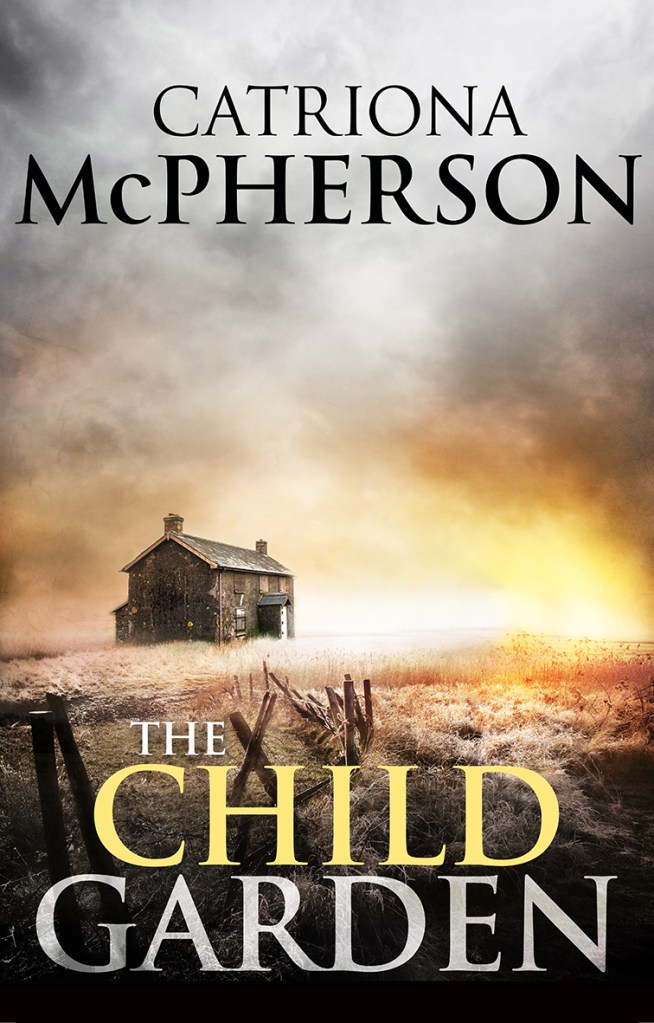
I changed it very happily because I love a witch almost as much as I love a stone. And I do love a stone. My favourite I’ve ever written was in The Child Garden, where there’s a rocking stone just outside Gloria’s house – a large oval boulder that sits in a cup it’s not connected to and is capable of rocking back and forth on. These stones are real but rare. Most of them have been rocked off their cups and rolled away over the ages. In my story, I had the devil trapped in the stone after being tricked into crossing a bridge. (He never does wise up to that, does he?) Gloria’s responsibility as the householder is to rock the stone twelve times a day to keep him addled so he can’t escape. But not thirteen times. Because of Judas at the last supper. And there we are again hopelessly confused between stone imps, Satan, God and gods, angels and fairies. It’s the Scottish way and we wouldn’t change it.
Readers: I’d love to hear the bits of folklore from your bit of the world or the place of your ancestors. If there’s a stone involved, so much the better. I’ll send one commenter a copy of the new book!

Serial awards-botherer, Catriona McPherson (she/her) was born in Scotland and immigrated to the US in 2010. She writes: preposterous 1930s private-detective stories, including September 2024’s THE WITCHING HOUR; realistic 1940s amateur-sleuth stories about a medical social worker; and contemporary psychological standalones. These are all set in Scotland with a lot of Scottish weather. She also writes modern comedies about a Scot out of water in a “fictional” college town in Northern California. She is a proud lifetime member and former national president of Sisters in Crime. www.catrionamcpherson.com

 The Wickeds
Congrats on your new book, it sounds so fun! I find folklore fascinating, and Scotland sounds like it has a lot. We have a large boulder at a church in the town I grew up in, Manchester, Maine – it has two footprints on it. One is man sized, the other very large and misshapen. Story goes a farmer was working in his field where he encountered the large rock and couldn’t move it. He shouted, “I’d sell my soul to the devil if he’d move this rock!” And the old devil accepted his offer – the next morning the rock was moved, the farmer was gone, and that rock had the two footprints on it!
LikeLike
Love it! What is it with the devil and the stones? Made into a bridge or just plonked on the earth, he can’t resist one. Cx
LikeLike
(Second try) – What is it with the devil and rocks? He can’t resist a good lump of stone, can he?
LikeLike
I love this post! Even though my people come from where you do, Catriona, the connection is too far in the past for my family to have retained any folklore. Not on the Irish side, either. I did love the huge granite stones in the Sierras when we camped there every summer. Fabulous for climbing on and pretending they were ships or engines or hiding places for treasure.
LikeLike
We’ve made it from California to Montana en route to your part of the world, Edith, and saw some pretty amazing stacked rocks in Idaho. No potatoes . . .
LikeLike
My paternal grandmother came from 8 generation of fisherman in Norway. No folklore but if I could go back in time the stores the men would have to tell.
LikeLike
Funny you should say that. I wrote an entry in the Dandy Gilver series called The Reek of Red Herrings, about the northeastern fisherfolk of Scotland (close ties to Norway). Their folklore made my eyes pop out.
LikeLike
Placing stones on Jewish graves is a practice of ours to show respect.
LikeLike
A much more benign role for them! Catriona
LikeLike
Golem, in Jewish folklore is an image endowed with life. Many believed in this lifelike human as it grants you powers and longevity.
LikeLike
I always wondered if JRR Tolkien stole Gollum. And seriously debased him.
LikeLike
I really don’t know if folklore has anything to do with them, but in many places in the southwest you find cairns (stones stacked like a pillar) to memorialize someone or something, to act as a marker, some people use them for prayer or meditation.
LikeLike
I love the idea of new traditions accruing around them. Cx
LikeLike
Welcome to the Wickeds, Catriona! As more and more evidence has emerged that our human ancestors lived side-by-side with other hominoids, I like to believe, without the slightest bit of evidence, that our legends about giants, and fairies and trolls, and all sorts of other human, but not quite human, beings have been passed along all that time time.
LikeLike
I’m all in on that with you, Barbara! Cx
LikeLike
I come from a family of witches, mainly three aunts on my mother’s side, so any witchy books are first on my list to be read. The only folklore I can remember is my aunt leaving bread on a plate outside her backdoor on the day of the dead. Why bread I don’t know, but she was a quirky woman and I was fascinated by her. Though these three sisters lived far apart, I recall when I was about eight years old and they had gathered to visit with a pregnant relative. I remember watching them swing a pendulum to determine whether the baby would be a boy or girl. So much magic and I wish I they had shared what they knew with me. Your books sounds fascinating as does the leaping stone.
p.s. the last time I commented here, as I’m new to your site, my name did not come up. It’s Christina Lorenzen.
LikeLike
I am struggling to get my name to come up today too, Christina. Driving – well being driven right now – on Hwy 2 through rural Montana, using tbe same overworked phone for navigation and commenting
LikeLike
Thanks so much for visiting, Catriona! There is a rock in a wall in Manchester, Maine thought to contain the Devil’s Footprint. It has strange markings and there are a number of different stories about what they are and how they came to be, but they all involve the Devil in some way or another.
LikeLike
He gets around!
LikeLike
I guess this would be Polish folklore or superstition, but my neighbor’s mother-in-law said you had to leave the house by the same door you entered when visiting friends to prevent bad luck.
LikeLike
I’ve heard that one too!
LikeLike
Loved this book, which landed on my Kindle the same day it came out in the UK. Who knew?
And love you 😘
LikeLike
Headed your way, Ann!
LikeLike
Although there are plenty of stones and rocks in Pennsylvania, I don’t know any folklore about them. Groundhog Day is all I can think of. Thanks for the chance.
LikeLike
I’ve actually been to Punxatawney!
LikeLike