Jessie: Glad for some rain after quite a dry summer!
Today’s guest has brought us a fascinating look at a topic I find fascinating: Dark History. Take it away, Vanessa!
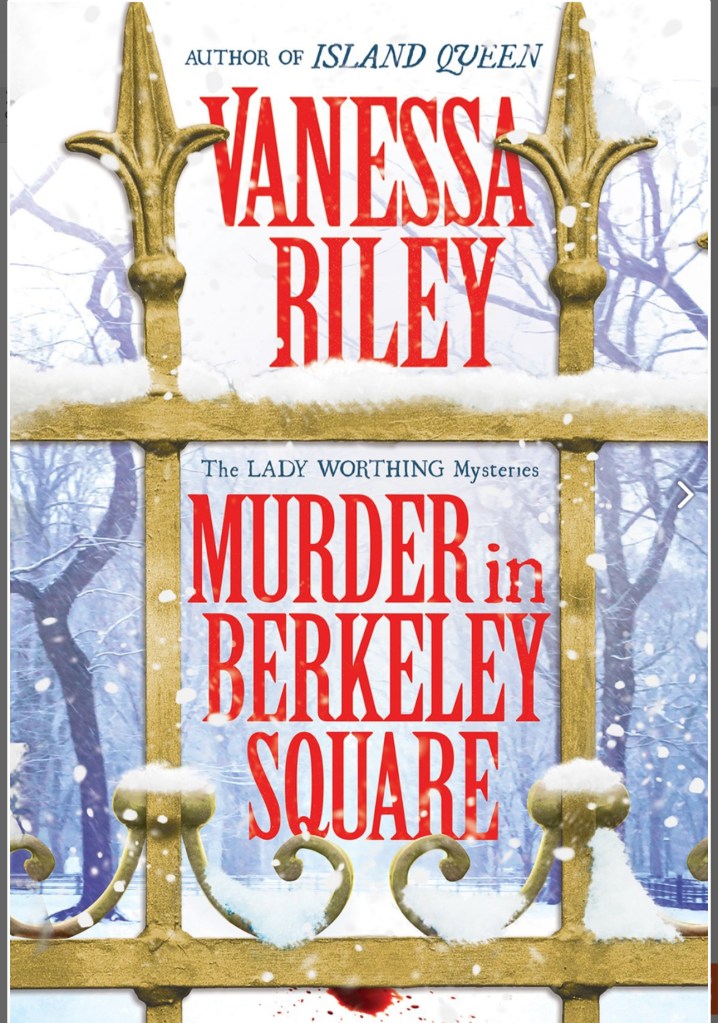
Repurposing Dark History: Reflections on Murder in Berkeley Square and Agatha Christie’s And Then There Were None
History is filled with complex, often painful stories. When we refuse to hide from it or close our eyes to the pain, we uncover truths about humanity that sometimes are difficult to digest or reconcile. This is especially true when systemic racism, colonialism, and hatred meet. As a writer, one of my key motivations is to shine light on these dark aspects and recontextualize them, transforming the narrative to expose the past and the lessons we must learn from them. This process is central to my latest novel, Murder in Berkeley Square. I adore Agatha Christie, but as a Regency girly having to confront beloved Georgette Heyer’s antisemitism, I have to showcase the disturbing nursery rhyme taught to children, which is the basis for And Then There Were None.

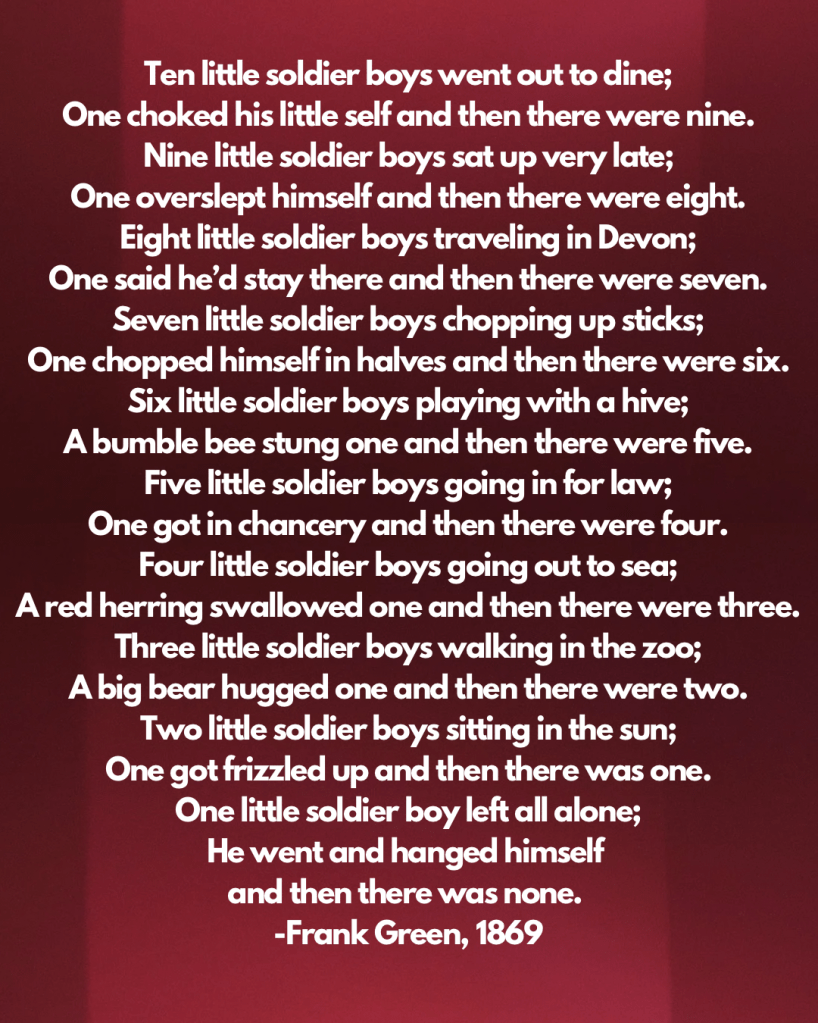

For many readers, And Then There Were None is their favorite Agatha Christie mystery. Who isn’t gripped by alleged privileged strangers being murdered in the manner of a rhyme?
Nonetheless, most don’t know the origins of the nursery rhyme or the many titles the novel has had since its 1940s debut.
The rhyme and Christie’s novel were both originally titled Ten Little N****** Boys—yes, with the hard R—. Please remember that I said the rhyme was taught to children as an early lesson on hatred.
In 1868, the rhyme was changed to Ten Little Injuns, as if attacking another marginalized group made it better. We are different people. At least, I’d like to think so. And I have great hopes for the youth.
In Murder in Berkeley Square, I decided to focus as Christie did, killing off privileged people who had a reason to die. In my novel, the rhyme becomes a chant used by rebels from Martinique as they rise up against their colonizers—the Grand Blancs—during the island’s turbulent history of slavery and revolt. Through this shift, the chant no longer represents victimhood but becomes a symbol of resistance, turning the tables on its original terrible connotations.
Reimagining pieces of history can be challenging and empowering. My aim was not to erase the past but to spotlight it and bring it forward in ways that allow readers to see the horrors of colonialism and racism and ensure humanity doesn’t continue to grow the legacies of these injustices.
Murder in Berkeley Square offers readers a look at Abigail Monroe, the Lady Worthing, a woman of Scottish and Jamaican heritage, and how she navigates her society, which can be patriarchal, misogynistic, and racist. Yet, you see her power and how her world responds to her and eventually embraces and values her spirit. The result is a fast-paced mystery with everything at risk.
This approach—holding a mirror up to history—forces us to face it rather than hide from it. Reading is liberating and healing, and these hopes are central to my writing. By understanding the past, even when it’s uncomfortable, we can work toward a better, more just future.
And Then There Were None remains a fascinating and iconic mystery, but we must not overlook the troubling context from which it emerged. With Murder in Berkeley Square, I hope to offer readers both a thrilling mystery and a chance to reflect on the importance of confronting the darker sides of history.

Readers, do you enjoy reading about dark history? Writers, how do you navigate troubling things from the past in your own work?


 The Wickeds
Welcome to the blog, Vanessa! I think fiction is the perfect place to illuminate those dark corners of history. I did the same with Charity’s Burden the only one of my Quaker Midwife Mysteries to win the Agatha for Best Historical, and I think it was because it centered on contraception and abortion in the nineteenth century.
LikeLike
Yes, I do enjoy when dark aspects are brought to light in the stories I read. Hiding history doesn’t erase it. Instead, it allows it to repeat through ignorance. When shown in it’s true light and ways to address it in a appropriate manner can be very interesting to read and enlighting as well.
“Murder in Berkeley Square” sounds like an amazing book and that’s why it’s already on my TBR list. Can’t wait for the opportunity to read and review it.
2clowns at arkansas dot net
LikeLike
I admire your approach and am inspired by it. I’m of a mind that human tendencies are universal, including racism, and will naturally reoccur if our awareness of them slips. Literature is one important way we can bring the dark things into the light and when our protagonists fight the good fight against the darkness, we are more inspired to do it in our own lives.
LikeLike
What an interesting post. Shining the light on the dark is part of the work we do. I look forward to reading your book–huge congratulations!
LikeLike
Thank you so much for sharing. It does not matter to me if it is a dark mystery as long as it is not gory or graphic. God bless you. Congratulations on your new book.
LikeLike
Sounds like an amazing book. Congratulations!
LikeLike